UFL - Soccer Game 2026
- 3.8
- Rating
- 5.00M
- Installs
- Free
- Price

 Analysis by App-foxy
UFL - Soccer Game 2026 is the kind of sports game I open when I want a quick football fix but still want my decisions to matter. I start with a simple goal: shape a team, take it into a match, and see whether my choices survive contact with the opposition. That sounds familiar for a football game, yet the appeal is in the repeating rhythm. I act, receive immediate feedback from the match, earn a reason to improve, reset my approach, and usually find myself ready for another session.
That loop makes the game easy to understand without making it completely mindless. It is available for free, belongs to the sports category, and comes from XTEN LIMITED. The store presents it as a real football simulator focused on building a dream league team, but I think its strongest quality is more practical: it gives football fans a compact way to move between team-building decisions and match-day pressure.
The game is rated for Everyone, which makes it approachable for a broad audience. At the same time, anyone expecting the depth of a full console football title should set expectations carefully. This is a mobile game, and its best moments come from short, repeatable interaction rather than from recreating every detail of a long football season.
You May Also Like

 Google Keep - Notes and lists
Google Keep’s Quiet Growth Shows the Appeal of Simpler Notes
As mobile work gets busier, Google Keep keeps winning a simple contest: capture a thought quickly, find it later, and get on with the day.

 Blood Strike: 2.5 Anniversary
Blood Strike’s Loadouts Turn Every Drop Into a Tactical Gamble
A close look at Blood Strike’s custom loadouts: how fast access to signature weapons reshapes its battle royale rhythm, rewards preparation, and narrows the gap between fights.

 Pandora - Music & Podcasts
Pandora’s Music Is Easy to Start, but Harder to Recover
Pandora’s strength is its low-effort path from a seed to a station. Its weak spot is how much confidence it asks you to place in connection, setup, and quiet recovery.

 8 Ball Pool
 Is Built on Rivalries, Rematches, and Routine
A close look at the rivalries, rematches, shared routines, and unanswered safety questions that turn a quick pool match into a persistent mobile community.

 Samsung Music
’s Quiet Strength Is Playing What You Already Own
Its reach comes less from spectacle than from dependable access to a personal library. That simplicity is both the app’s strongest retention engine and its ceiling.

 AccuWeather: Weather Radar
AccuWeather Review: A Quick, Clear Forecast for Everyday Decisions
For everyday plans, the best forecast is the one you can understand quickly. AccuWeather makes rain timing, radar, and local conditions easy to act on, with a few trade-offs.
More From Our News Desk



From the first team decision to the first match
I find the opening team choices most useful when I treat them as a starting point, not a test I have to pass perfectly. This section looks at how to turn that first decision into a manageable experiment: keep the plan simple, play, and notice what the match actually tells you. That approach also makes it easier to spot whether the game’s team-building rhythm suits you before you invest much time.
The opening action feels immediately understandable
My first useful step was not trying to master every option at once. I treated the opening as a test of the central promise: can I make a team feel like mine, then see that identity reflected in play? The answer depends on how much attention I give to the choices in front of me. A rushed setup turns the game into a sequence of taps, while a more deliberate approach makes the first match feel like a small experiment.
I recommend starting with one clear idea rather than trying to build a perfect squad immediately. For example, decide whether you want a team that feels aggressive, controlled, or simply reliable. Then watch how your decisions affect the match instead of changing everything after one disappointing moment. This is one of the more useful habits in UFL: change one part of your approach at a time. It gives the feedback more meaning and prevents the team-building layer from becoming guesswork.
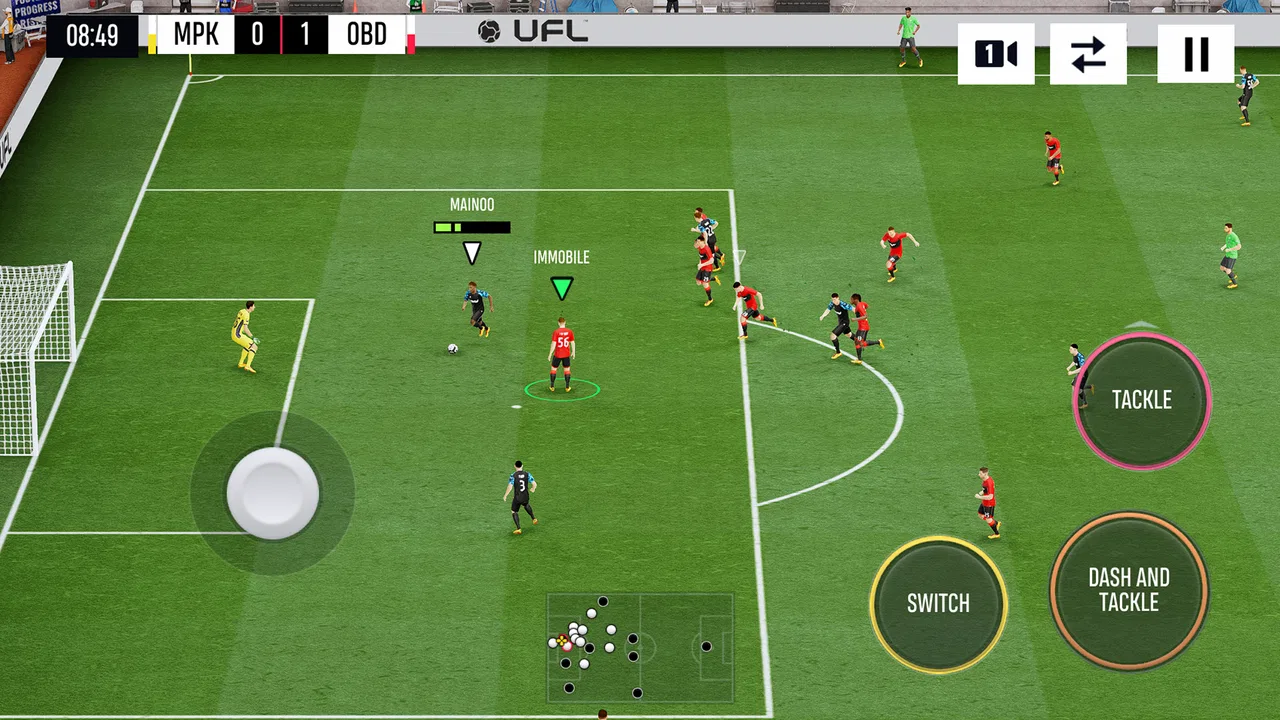
The football presentation is accessible enough for casual players, but the attraction is not only visual. The important question is whether the action gives you a reason to keep paying attention. When a promising move works, the reward is not just that the match advances. I feel that my earlier choice had a purpose. When the same idea fails, I have a reason to rethink it rather than simply blame bad luck.
Why the first session can be deceptive
A short first session may make the game seem simpler than it is. The basic football structure is familiar, so experienced players can begin quickly, but the longer-term interest comes from learning how the team-building decisions and match results influence one another. I found that the game becomes more enjoyable after I stop judging it by the first few minutes and start looking for patterns across several sessions.
That does not mean every player will want to invest that patience. If you only want instant arcade action with no interest in developing a squad, the management side may feel like an interruption. Conversely, if you want an extremely detailed football simulation with exhaustive tactical control, this mobile format may feel lighter than you prefer. Its middle ground is also its identity.
A practical routine for new players
My preferred opening routine is simple. I first look over the team rather than spending resources impulsively. Then I play a match with the existing setup, note where the team feels weak, and make a focused adjustment. After that, I play again before deciding whether the change helped. This process is slower than chasing every available improvement, but it makes progress easier to understand.
That workflow is especially useful on a phone because it turns a few spare minutes into a complete test. If I have time during a commute or while waiting for an appointment, I can play one match and leave with a clear next step. When I have longer, I can use several matches to compare decisions. The game supports both habits because the loop does not require me to commit to a huge uninterrupted session.
Action, feedback, reward, and the reason to restart
The match loop matters most when each result helps me decide what to try next, rather than pushing me to change everything at once. Here I focus on separating useful feedback from frustration and on setting a sensible boundary around optional spending. Those habits make the reward and reset feel more deliberate, and help explain why a short session can still leave me with a clear reason to return.
The feedback rhythm keeps matches from feeling disposable
The most important part of the experience is the feedback rhythm. I make a team decision, enter a match, and quickly learn whether that decision is helping or creating a new problem. A successful move gives me confidence, while a weak result points toward a change. This is more satisfying than a game where the reward arrives without teaching me anything.
I pay attention to three kinds of feedback while playing. First is the immediate match result: whether an attack develops, whether a defensive choice holds, and whether the team feels coherent. Second is the broader sense of progress after the match. Third is my own reaction: did I lose because the plan was poor, because I executed it badly, or because I simply need a stronger squad?
That last question matters. Mobile sports games can become frustrating when every loss feels identical. Here, I get more value when I treat each result as information. A defeat is not automatically useful, of course. If I change several things at once, I learn very little. But when I keep the experiment narrow, even an unsuccessful match can guide the next session.
The strongest feedback is the kind that changes what I do next. UFL works best when I let the match influence my decisions instead of treating the team-building screen as a separate activity. That connection gives the game its sense of momentum.
Reward is more than winning
Winning is the obvious reward, but it is not the only reason I return. I also enjoy seeing a previously unreliable approach become more consistent. A small improvement in how the team performs can feel meaningful because I know it came from a choice I made rather than from simply waiting for a bonus.
This is where the dream-team idea becomes tangible. A squad is not satisfying merely because it contains desirable players or looks impressive on paper. It becomes satisfying when I understand why it works. I prefer a team with a clear purpose over a collection of upgrades that do not fit together. That is a useful trade-off for players who are tempted to chase every improvement at once.
The free entry point helps with experimentation. I can try the game without paying first, decide whether the match loop suits me, and only then consider whether optional purchases are worth discussing. In-app purchases range from $0.49 to $114.99 per item, so I would recommend setting a personal spending limit before getting deeply invested. The wide range makes self-control more important than the initial download decision.
I do not see purchases as a substitute for understanding the game. Spending may make progress feel more immediate, but it cannot automatically give a player good judgement about team choices or match decisions. For me, the better approach is to play enough free sessions to identify what I actually enjoy before spending anything. If the fun disappears without purchases, that is useful information in itself.
The reset is what creates the next session
Every match eventually resets the situation. A win gives me a stronger position, but it also raises the question of whether I can repeat the result. A loss creates a more obvious problem to solve. Either way, the next session begins with a slightly different context, and that is what stops the loop from feeling completely flat.
I particularly like the reset after a disappointing match when I can identify one practical adjustment. Maybe I need to stop forcing the same idea, rethink the balance of the team, or simply play with more patience. The reset is less satisfying when I respond emotionally and rebuild everything at once. In that situation, I lose the thread connecting action and feedback.
A realistic everyday scenario is a short evening break after work. I can play a match without promising myself a full campaign, see how the current team performs, and leave after making a note of one change for tomorrow. The next time I return, I have a small personal objective rather than a vague instruction to “get better.” That makes the game easier to fit into a busy routine.
How it compares with familiar football alternatives
Compared with a purely arcade football game, UFL - Soccer Game 2026 gives me more reason to care about the team beyond the next kick. The squad-building focus adds continuity, so a match can be part of a larger plan. The trade-off is that players looking for immediate, uncomplicated action may find the extra layer slower.
Compared with a traditional manager-style football game, it feels more connected to the match itself. I am not only reviewing menus and long-term plans; I am using the match to judge whether those plans make sense. The compromise is depth. Dedicated management games can offer more detailed administration and analysis, while this title is more approachable for someone who wants team decisions tied to playable football.
It also differs from a full-scale console simulation in the amount of commitment it asks from me. A console game may be the better choice if I want extended matches, a large presentation package, or the most demanding control experience. UFL is more convenient when I want a mobile-first loop that I can repeat in shorter bursts.
Small habits that improve the experience
My first tip is to avoid judging a new team after one result. One match can expose a weakness, but it does not always explain it. I prefer to repeat the situation and look for a pattern before spending resources or making a major change.
My second tip is to keep a simple mental record of the last adjustment. If the team improves, I know what helped. If it gets worse, I know what to reconsider. This sounds basic, but it prevents the common mobile-game habit of tapping through upgrades without knowing why they matter.
My third tip is to separate progress goals from performance goals. A progress goal might be improving the squad, while a performance goal might be making a particular approach work more reliably. Keeping both in mind makes the reward loop richer. I can still have a productive session even when the final result is not a win.
My fourth tip is financial rather than tactical: treat the purchase range as a reason to decide your boundaries early. The game is free to start, but optional spending can become part of the experience for players who want faster progression. I would only spend after confirming that the core matches are already enjoyable without that shortcut.
Who should play and who should skip it
I would recommend this game to football fans who enjoy building a squad and then testing their choices in matches. It is also a good fit for mobile players who like repeatable sessions with a clear reason to return. The Everyone age rating makes it approachable for a broad audience, although younger players may still need guidance around optional purchases.
I would be more cautious recommending it to someone who dislikes progression systems, dislikes repeating matches, or wants a highly detailed simulation above all else. The game’s appeal depends on accepting the loop: choose, play, evaluate, improve, and begin again. If that structure sounds like work rather than fun, the usual quick arcade alternative may be a better match.
It is also not ideal for a player who wants every session to feel radically different. The satisfaction here comes from gradual refinement, not constant reinvention. I enjoy that measured pace, but I understand why someone seeking novelty in every match could find it familiar too quickly.
Technical and ownership details worth knowing
The current version is 14.1.1, and the game requires Android 10 or later. That requirement is worth checking before planning to play on an older device. On a compatible phone, the free download makes it easy to test the central loop without an initial purchase, which is the right way to approach a game whose appeal depends so much on personal taste.
Its average rating is 4.1 from around 30 thousand ratings, with more than 1 million installs. Those figures suggest that the game has found a substantial mobile audience, but they should not replace a personal trial. Sports games are especially dependent on control preferences and tolerance for progression, so I would use the free starting point to decide whether its rhythm suits you.
The developer is XTEN LIMITED, and the game was released on May 21, 2026. I mention those details because version and release context can matter when deciding whether to revisit a mobile title, particularly if you are comparing it with older football games that have already settled into a familiar routine.
My verdict on the complete loop
UFL - Soccer Game 2026 succeeds when I approach it as a football decision loop rather than as a complete replacement for a console simulation. The first action is easy to understand: shape a team and take it into play. The feedback arrives through the match and the results. The reward is a mixture of winning, learning, and seeing the squad become more coherent. The reset gives me a new problem to solve, which is the reason another session begins.
That design gives the game a clear identity. It is more thoughtful than a disposable arcade match, but less demanding than a deep management simulator or full console football package. The free entry point is helpful, while the broad in-app purchase range means I would play with a budget in mind. I also would not expect every weakness to disappear through upgrades; better decisions still matter.
After spending time with it, I would recommend giving it a try if you want football matches connected to team-building and you enjoy improving through small adjustments. I would skip it in favor of a different football game if your priority is either instant action with no management layer or maximum simulation depth. For the right player, though, the loop is convincing: one match answers a question, the answer suggests a change, and that change creates a good reason to come back.
FAQs for UFL - Soccer Game 2026
01What platforms is UFL - Soccer Game 2026 available on?
UFL - Soccer Game 2026 is available for both Android and iOS devices. You can download it from the Google Play Store for Android and the Apple App Store for iOS. Ensure your device meets the minimum system requirements for an optimal gaming experience.
02Does UFL - Soccer Game 2026 require an internet connection to play?
Yes, UFL - Soccer Game 2026 requires an internet connection for most of its features. While you can play some offline modes, accessing live events, multiplayer matches, and updates necessitates a stable internet connection to ensure the best gameplay experience.
03Are there in-app purchases in UFL - Soccer Game 2026?
UFL - Soccer Game 2026 offers a variety of in-app purchases. These include player packs, cosmetic upgrades, and season passes. While the game is free to download and play, these purchases can enhance your experience, offering more content and customization options.
04How does UFL - Soccer Game 2026 handle updates and new content?
UFL - Soccer Game 2026 frequently releases updates to introduce new content, improve gameplay, and fix bugs. Players can expect regular updates that include new events, player roster changes, and enhancements to game mechanics, keeping the experience fresh and engaging.
05Is UFL - Soccer Game 2026 suitable for all ages?
UFL - Soccer Game 2026 is designed for a wide audience, typically rated for ages 4 and up. However, due to in-app purchases and online interactions, parental guidance is recommended for younger players to ensure a safe gaming experience.
Pros
- Realistic graphics enhance gameplay immersion.
- Smooth controls for an intuitive user experience.
- Diverse team management options available.
- Regular updates with new features and players.
- Online multiplayer mode is engaging.
Cons
- In-app purchases can be costly.
- Occasional lag in online matches.
- Limited offline modes available.
- Requires constant internet connection.
- Some ads interrupt gameplay.

UFL - Soccer Game 2026
Gallery